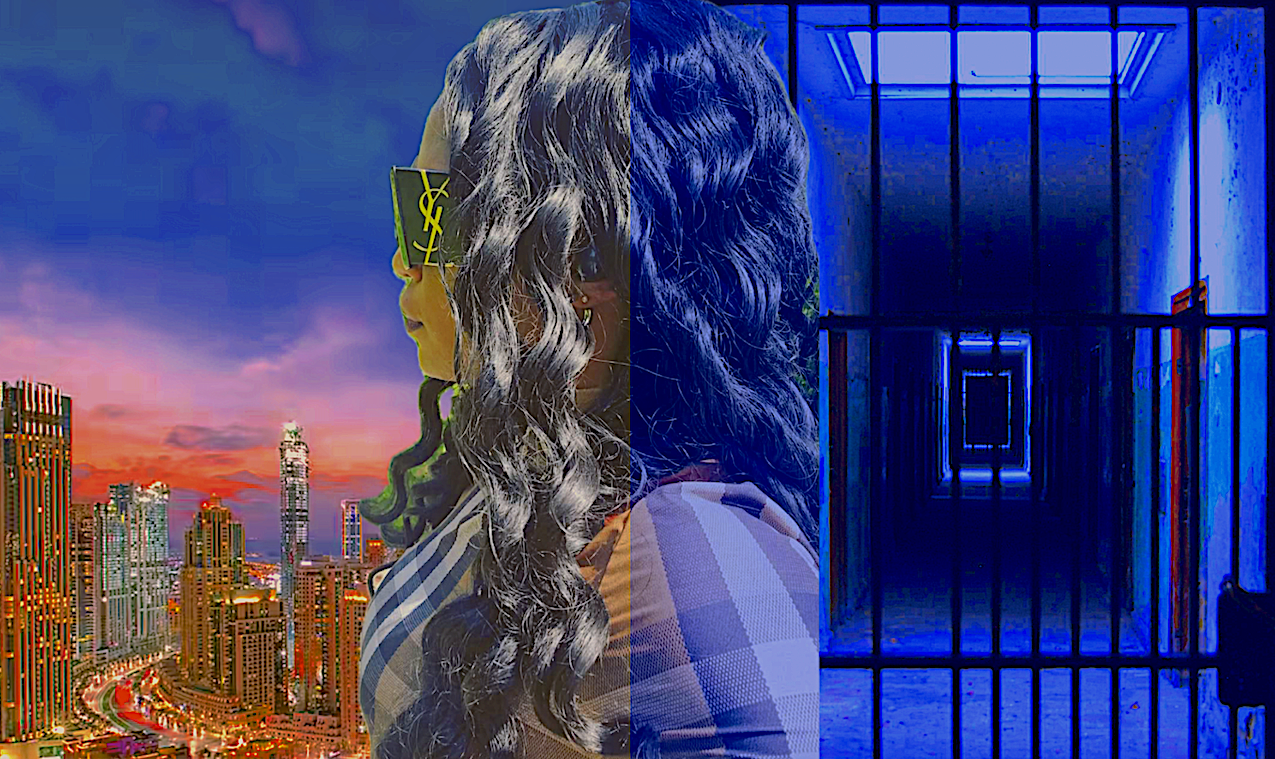
Dubai sold you a dream. Luxury apartments. Tax-free wealth. Influencer lifestyles. The “boss babe” paradise. But what if that dream… isn’t real?
Welcome back to Part 3 of this series: “Dubai ‘Boss Babe’ Life is a Fake…”
In Part 1 – Unhinged Dubai influencers forget they’re stuck in WW3, we watched the viral reactions—influencers crashing out because of the missile threats, and the reality of conflict crossing boarder into what was supposed to be a “safe haven.” In Part 2 – It’s Game Over for Dubai Hustlers, I broke down the data—how war, instability, and global tensions are already hitting investment, property markets, and Dubai’s growth story. The final three installments of this mini-series Parts 3 to 5 – Women trapped in Dubai, goes deeper. Because behind the luxury and skyline, there are stories that don’t make it into glossy Instagram and TikTok posts.
I’m going to be talking about:
• Tourists and expats facing serious jail time for minor incidents, which would be considered negligible or common sense in western territories, however instead severe penalties are served
• Women whose unaliving in Dubai have raise uncomfortable questions
• High-profile cases that reveal how strict and unforgiving the Dubai legal systems can be
This isn’t about scaremongering. It’s about context.
Because if you’re being sold a lifestyle… you deserve to understand the full picture, especially against a backdrop of Western women navigating a completely different cultural and legal landscape.

Over 70 British tourists, expats, and even cabin crew have reportedly been detained. Not for violent crimes. But for something as simple as filming or even receiving footage of missile or drone activity. Under laws designed to protect “national security,” people can face up to 10 years in prison. Some have been held in overcrowded cells, denied basic needs, waiting months just to be charged.
How do local treat victims seeking legal help?
Victims face systemic obstacles: and can be pressured by local authorities to drop their case or can potentially even be jailed on a fabricated allegations by they accuser, such as a false alcohol charge
Lack of protection: there are cases of failed police protection of victims from harassment and threats by perpetrators and their associates.
Institutional neglect: where the government hospital refuse to treat injuries, showing a case of medical and clinical negligence and causing potential harm.
Prioritization of reputation: justice is often contingent upon privilege, which means that it’s plausible that convictions are pursued only to avoid a PR nightmare, whereas similar crimes against non-emirati citizens, women of colour, domestic workers or labourers often receive little to no justice or public outcry.
Legal entrapment: Expats can be held liable in absentia or face imprisonment for civil disputes or minor infractions, with little opportunity to present evidence or appeal, as highlighted by the case of Selena Waterman Smith
Key Implications for check bouncing in Dubai and Legal Procedures:
•   Decriminalization: Most cases involving insufficient funds are treated as civil disputes.
•   Penalties: Fines depend on the check amount, typically starting at AED 2,000 for amounts under AED 50,000.
•   Legal Action: The recipient can file an "execution case" directly with the court to freeze the issuer's assets, including bank accounts and vehicles.
•   Exceptions (Criminal): Criminal cases remain for fraud, such as ordering the bank to stop payment, intentionally closing the account, or forging signatures.
•   Consequences: A bounced check can lead to a blacklisted account and a 2-year suspension of checkbook issuance.
•   Immediate Steps: If a check bounces, contact your bank immediately for a written statement.
UK Apprentice Star, Selina Waterman-Smith
Why are court judgements made in absence?
information provided by the group Detained in Dubai, judgments made in absentia are an “extremely common issue” for expatriates in the UAE. individuals can be targeted by a legal claim—such as a business dispute or extortion—while they are out of the country, leading the court to rule in their absence. I could even go as far and say this process functions as a form of entrapment because:
Systemic Abuse: This highlights that this legal environment allows individuals to file false testimony without evidence to cause significant damage to others, creating a situation where there is “no help” for those caught in these disputes. Lack of Due Process: Individuals often find themselves facing imprisonment without having been granted the opportunity to present their evidence or defend themselves in court (13:38-13:45).
Immediate Risk of Arrest: most people in this situation are arrested the moment they arrive back in the UAE, at which point they often lack the opportunity to appeal the judgment (13:31-13:38).
This highlights that this legal environment allows individuals to file false testimony without evidence with an intent to cause significant damage to others, creating a situation where there is “no help” for those caught in these disputes
It’s a bit like the Anna Delvey case and check kiting—except in Dubai, instead of a scandal and prison sentence later, the consequences can hit immediately, trapping you in the system before you even have a chance to leave. Anna Delvey. The Anna Delvey situation is a high-profile fraud scandal in New York City which occurred, which took place took place between 2013 and 2017. She was arrested in 2017 and convicted in 2019. Unlike Dubai’s system, where financial disputes like bounced cheques can lead to immediate restrictions (like travel bans), Anna Delvey’s case:
• Took years to investigate
• Was handled through the criminal justice system after the fraud occurred. “The Anna Delvey case in New York showed how financial deception plays out—but in Dubai, similar financial issues can lead to immediate legal consequences before things even escalate that far.
Dubai brings in over 20 million people a year—but when nearly 70% of the population is male, that doesn’t just shape the economy… it shapes everything. Dubai is one of the fastest-growing cities in the world. As of 2023, the population sits at around 3.6 million people. Nearly 70% of that population is male. Across the UAE as a whole, it’s even more extreme—almost 64% male and just 36% female. That’s not natural population growth. That’s a system built on imported labour, where over 88% of people are foreigners, most of them working-age men between 25 and 44. Entire communities are built around this imbalance.
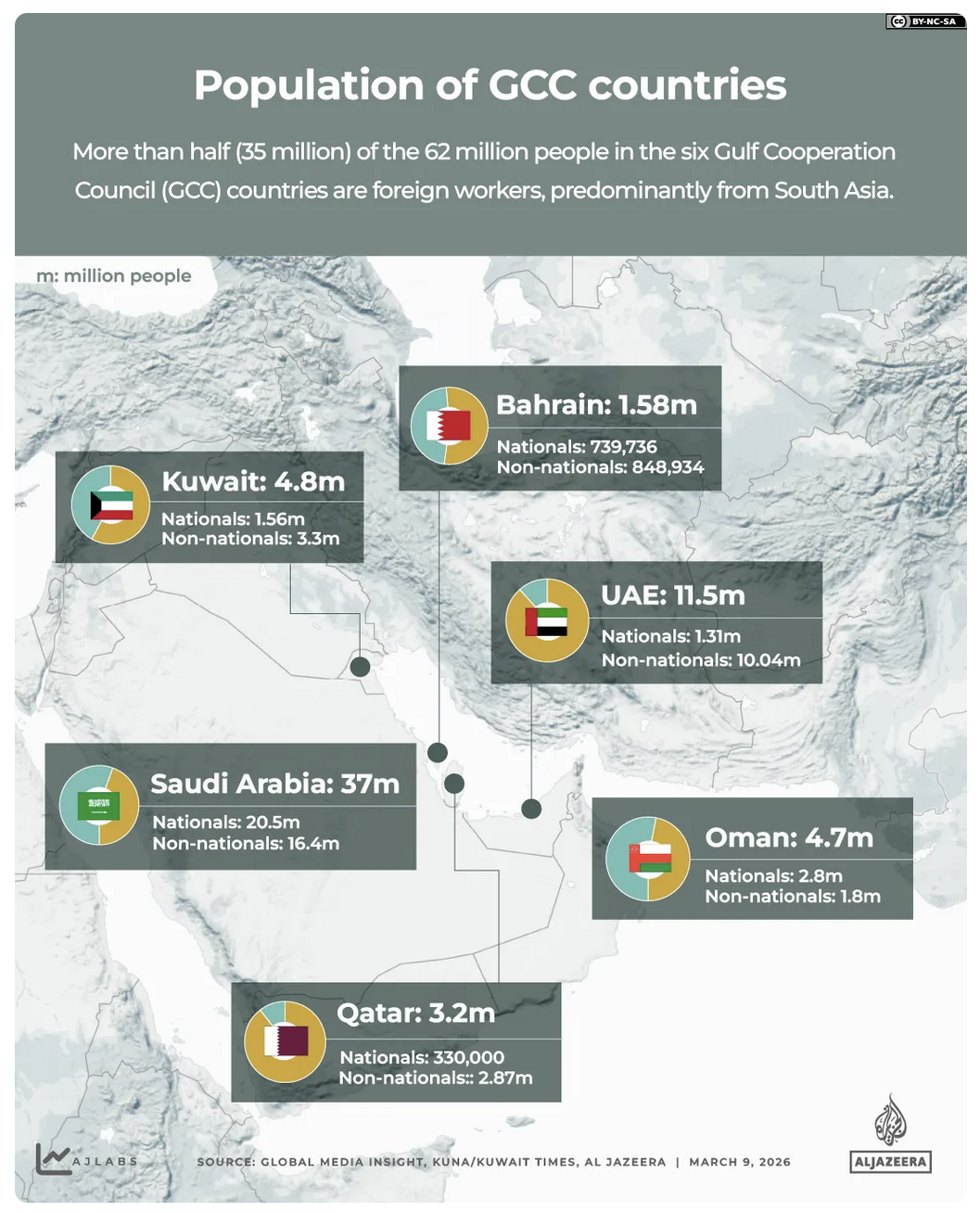
And when you combine that with strict legal frameworks, cultural expectations, and limited protections—especially for non-citizens… It creates a very different reality beneath the luxury. Because when you look closer—especially at the experiences of women—patterns start to emerge. Women—particularly non-Emirati, non-Arab women—often exist in a space where they are:
• Economically dependent
• Legally vulnerable
• And socially restricted
And in some cases… completely unprotected.
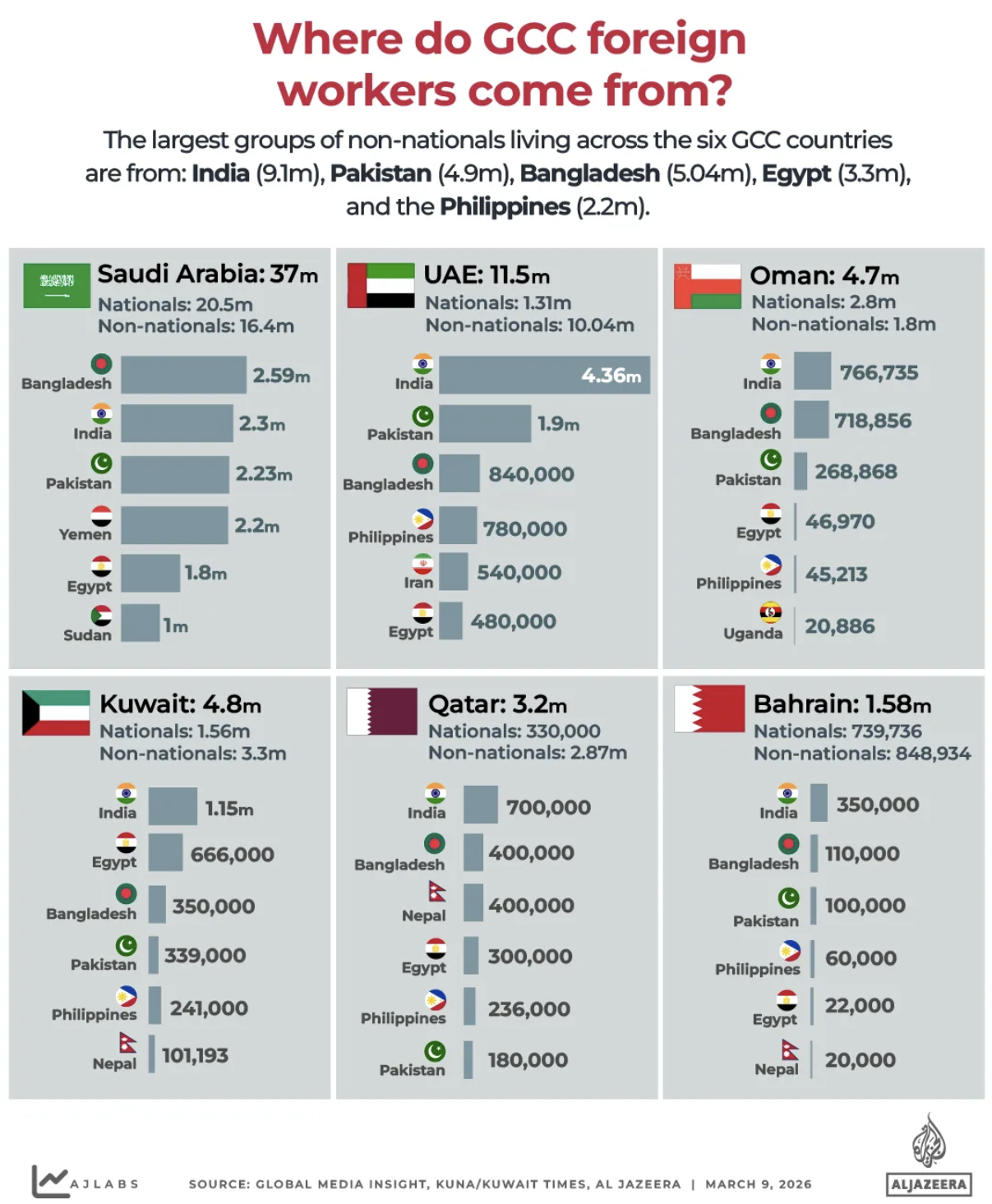
As of 2025–2026, approximately 85% to 92% of the population in Dubai are expatriates (foreign nationals), while Emiratis (citizens) constitute roughly 8% to 15% of the population. There are more than 200 nationalities living and working in the UAE. The expatriate community outnumbers the population of UAE nationals. Indians form the largest foreign community in the UAE, followed by Pakistanis, Bangladeshis, other Asians, Europeans and Africans. There many travellers and expats from a large number of global destinations, but there are a lot of opinions which highlight the lack of tradition found in Dubai, despite the large cultural mix found the city-state. It’s admittedly a modern and convenient city, however it’s noted that it’s like Singapore without the history, has the grandeur and spectacle of New York without the culture.
Key Demographic Data for Dubai/UAE (2025-2026):
•   Total Expat Population: Roughly 87% to 92% in Dubai.
•   UAE National Percentage: Approximately 11.5% in the UAE.
•   Key Nationalities: The largest groups include expats from India, Pakistan, Bangladesh, the Philippines, and a significant British population.
•   Growth: Dubai's population has increased, nearing 4 million, largely due to an influx of foreign professionals
Entertainment Economy – male dominated
Structural reality:
• UAE population is ~64% male / 36% female
• In Dubai specifically:
◦ ~69% male population (driven by expat workers)
This creates a gender-skewed demand economy
When you combine:
• Mass male population imbalance
• High disposable income (for some groups)
• Large migrant female workforce
• Strict legal + visa dependency systems
This creates a power imbalances
Women (especially non-citizens) are:
• economically dependent on visas/employers
• easier to control or coerce
• more vulnerable in informal economies
High demand + limited regulation visibility can lead to:
• exploitation risks
• coercive labour situations
• underground economies forming

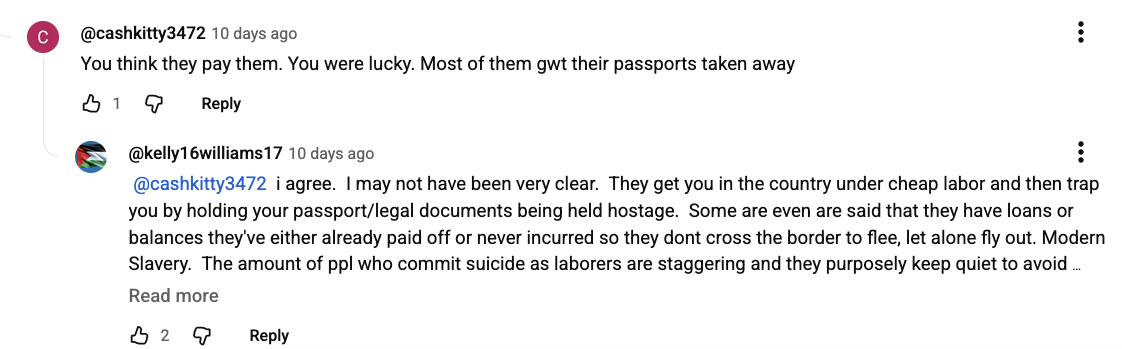
There’s something even more disturbing. A BBC investigation uncovered cases of women—particularly from Uganda—who were lured to Dubai with promises of jobs. Only to be trapped. Forced into exploitation. Buried under debts of $27,000 or more. Women like Monic Karungi and Kayla Birungi—whose deaths were officially ruled as unalived themselves…But families and survivors say the truth is far more complex. Reports of abuse. Control. And a system where complaints are dismissed.This BBC Eye investigation reveals that behind the online rumours lies an even darker reality, hearing from Ugandan women who say they were lured to the UAE, often under false promises of work, only to find themselves forced into prostitution, indebted to a man known in Dubai as ‘the Untouchable’. The mysterious deaths of several young Ugandan women in Dubai, including Monic Karungi and Kayla Birungi, have been linked by BBC Africa Eye to an illegal sex trafficking ring, defying official suicide rulings. Victims are often lured by fake job offers, forced into prostitution, and indebted to a trafficker known as “the Untouchable,” often facing extreme abuse and falling from high-rise buildings.
Key details regarding the investigations:
• Case Details: Monic Karungi (Mona Kizz) died in May 2022 after falling from a high-rise, followed by similar deaths of other Ugandan women, including one known as Kayla, often in the same neighborhood. • BBC Investigation: The investigative team exposed an illegal ring, featuring coerced sex work, high debt traps ($27,000+), and immense psychological trauma resulting from brutal abuse by clients. • Police Response: While Dubai authorities ruled many of these incidents as suicides, family members and survivors feel the deaths are suspicious, alleging that authorities often dismiss complaints, including those reported by Trafficked individuals seeking help. • The “Untouchable”: Survivors reported being trapped and forced into prostitution by a ringleader who, along with his network, exploits African migrants in particular. • False Promises: Victims are often enticed from Uganda with promises of legitimate employment, such as supermarket jobs, before being trapped
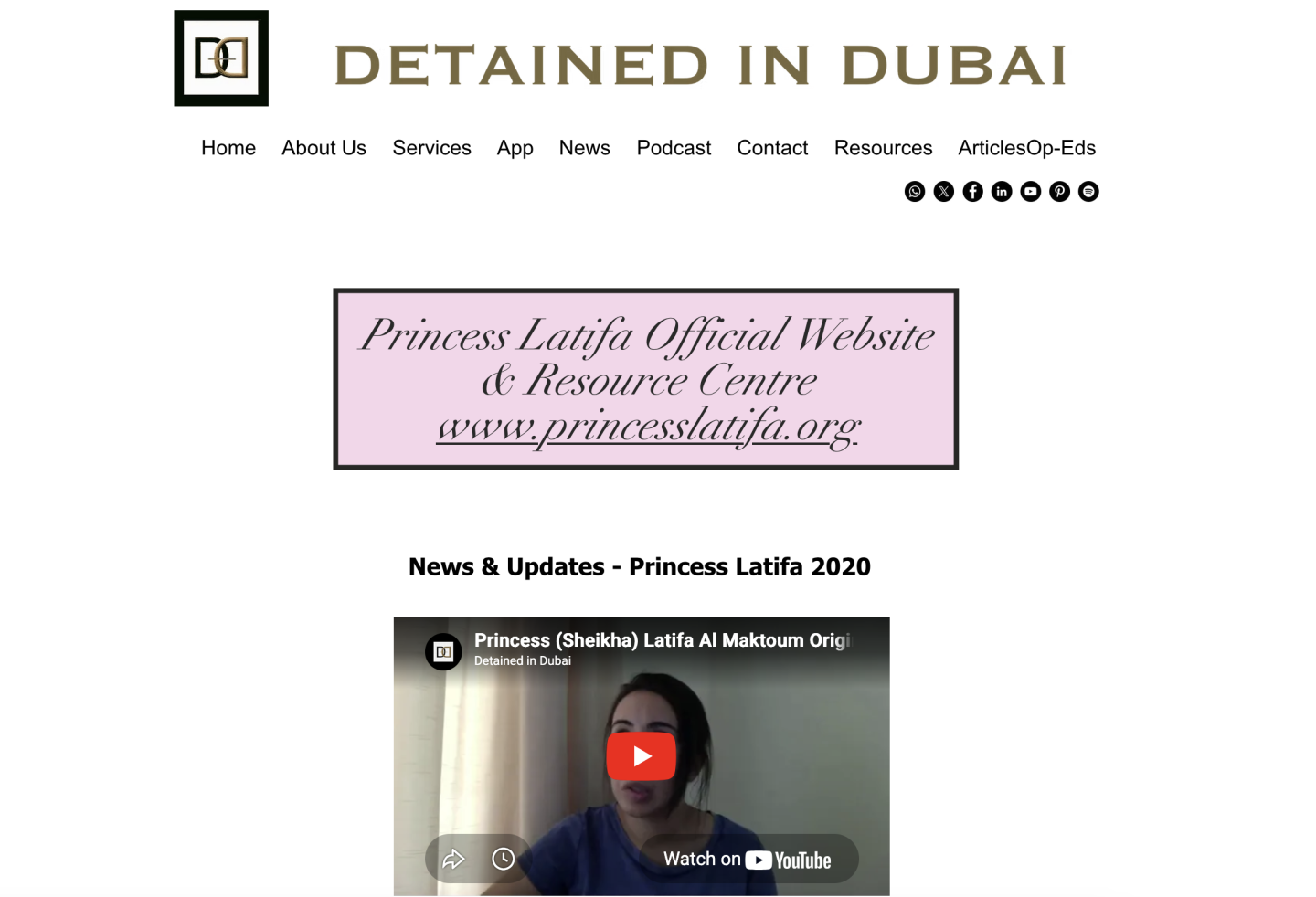
The Lost Princess of Dubai – Latifa
Princess Latifa bint Mohammed Al Maktoum, daughter of Dubai’s ruler, was forcibly returned to Dubai in March 2018 after a failed escape attempt. She was held in solitary confinement and subsequently in a guarded villa, accusing her father of taking her hostage. Secret videos released in 2021 revealed her fear for her life and reports of torture. She alleged in secret videos that she was held hostage by her father, prompting worldwide concern. She was later seen in limited, staged photos
Escape Attempt (2018): In February 2018, Latifa attempted to flee Dubai with the help of friends, including Tiina Jauhiainen, driving to Oman and boarding a yacht, the Nostromo.
Capture: The yacht was intercepted by armed forces off the coast of India. She was taken back to Dubai, and for months, her whereabouts were unknown.
Hostage Allegations: In 2021, BBC Panorama released secret video messages from Latifa, filmed while she was detained, in which she said she was being held as a hostage, was not free, and feared for her life.
Proof of Life: Following international pressure, particularly from the UN and rights groups, images of Latifa appeared on Instagram in 2021, though the BBC could not immediately verify them.
Background: Latifa is the daughter of Sheikh Mohammed bin Rashid Al Maktoum. This was not her first attempt to flee; she previously attempted to leave in 2002, which resulted in over three years of imprisonment.
Sister’s Case: Her older sister, Shamsa, also tried to flee the family’s control in 2000, disappearing from the streets of Cambridge