The UK’s Most Expensive Violin – the Stradivarius @ashmoleanmuseum (4K) | Violin Concerto in A Minor, 2nd mov. ‘Largo’ | This video is part of the Practise Diaries Series which has been created to ensure I can monitor, assess and improve on my listening skills and my overall violin technique.
MIND BLOWING SUPER FAST VIOLIN MELODIES | 2025 RECAP ✨ Unseen BTS Footage | Featured Pieces:
- Telemann Allegro 2nd Movement from Sonata No.4 in G
- Vivaldi Concerto in A Minor, Mov. 2
- Bartók – An Evening in the Village
- J.S. Bach – Violin Partita in D Minor
- Dmitri Shostakovich – Frühlingswalzer 🌺 (which translates to “Spring Waltz”)
FAST Violin Music Challenge – CRAZY Speed Runs | ONE TAKE EDIT | Practising Telemann Allegro 2nd movement from Sontata No. 4 in G
Instrument: Violin
Genre: Baroque
Piece style: Baroque
Year: ca. 1716 or before,
Published: Kleine Kammermusik
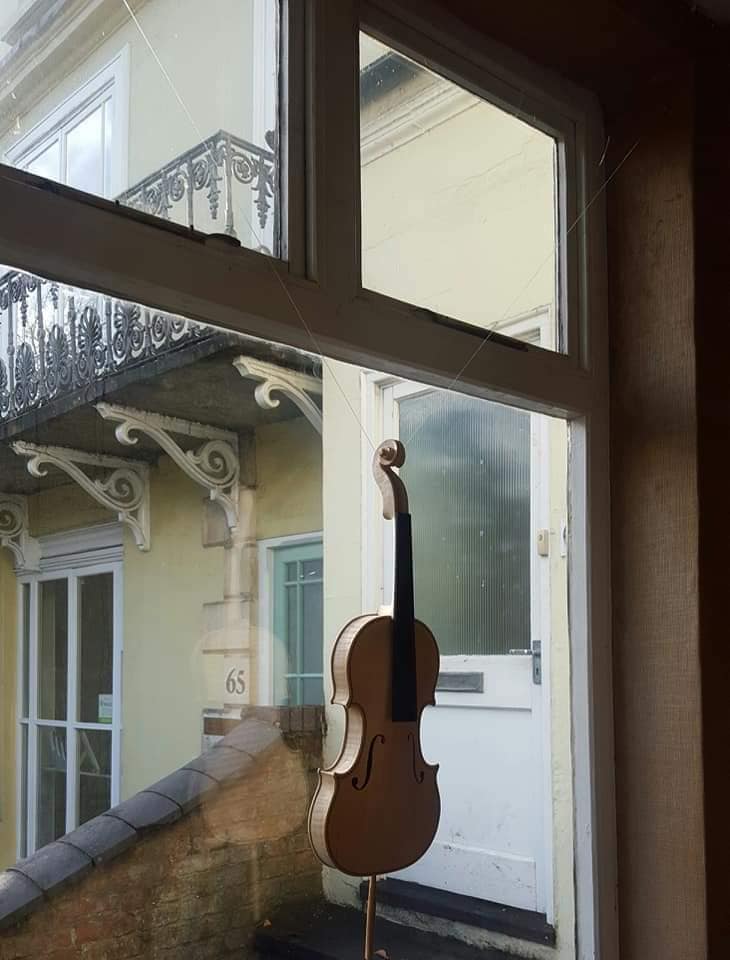
This video is part of the Practise Diaries Series which has been created to ensure I can monitor, assess and improve on my aural skills and my overall violin technique. ➤ The aim is to Test, Check and Correct my playing. Side note – my violin tried to escape from shot half way through because the violin runs were too damn fyre…
LIGHTENING SPEED VIOLIN PLAYING – Yuja Wang Inspired (Grade 8) | Dmitri Shostakovich – Frühlingswalzer 🌺 (which translates to “Spring Waltz”… as though anyone outside of the German diaspora would understand wtf this means)
Practising Frühlingswalzer ‘Spring Waltz’ from Albumstucke – Ballet Suite No. 2 by Dmitri Shostakovich (1906-1975) 🌺 |
A longer video of the whole piece (without retakes) will be uploaded soon. ➤ The aim is to test, check and correct my playing. I am playing from memory here (without sheet music) and have interpreted this song, which means I have ignored most editorial suggestions. ➤ BUSINESS EMAIL on my website ➤ www.sheiscallednv.co.uk
Practising ‘Allegro’ from Sonata in G 🇲🇫 Baroque Style Song (Grade 6) | Practising Allegro from Sonata in G (4th mov) by Senaille (without sheet music). A longer video of the whole piece (without retakes) will be uploaded soon. This piece is in a Baroque music style, particularly that written for violin or flute. Source: Quatrième Livre de Sonates (Paris, 1721). Jean Baptiste Senaillé (c.1688-1730) took his father’s place as violinist in the 42 Violons du Roi (1713) and published no fewer than 5 sonatas for violin and continuo between 1710 and 1727. He was one of the first French violinist-composers to adopt the Italian sonata style. ➤ The aim is to test, check and correct my playing. I am playing from memory here (without sheet music) and have interpreted this song, which means I have ignored most editorial suggestions.
Bartók ‘An Evening in the Village’ 🇷🇴 Early 1900s Folk Music (Grade 5) | In the summer of 1907 Béla Bartók (1881-1945) travelled round the villages of Transylvania collecting ancient folk music. ‘An Evening in the Village’ (1908) reflects the pentatonic sound and alternation between rubato and non rubato of some of the folk music that he heard there. ➤ The aim is to test, check and correct my playing – I am playing from memory here (without sheet music) and have interpreted this song, which means I might have ignored some or most editorial suggestions (as shown in the score)
How to Improve your Violin Bowing and Bow Hold: Tips for String Players | Do you want to improve your violin and bowing techniques but find practising scales for hours each day difficult and uninteresting? I have provided some handy tips and tricks on How to Improve your Bowing Technique in this easily digestible bitesize 5 minute tutorial. This masterclass has been made to be fun yet analytical. It’s also entertaining for non-musicians. Enjoy and keep playing…
➤ Isolate It
When we perform music on the violin, or play through pieces at speed, we have to rely a lot on the ‘automatic’ skills that we’ve built up during training. That’s fine if you already know a piece of music well. If you are learning a piece for the first time this can be really tricky to play with optimal bowing skill and attention with little or no mistakes. Try bowing the phrasing on open strings with the bow and using the right hand only without playing any notes (with the left hand resting on the body of the violin for support). When you feel confident with the bowing and phrasing of the piece or etude, introduce the left hand part and begin coordinating the left hand (playing the notes) with the right hand (using performance directions in the notation for bowing, phrasing and articulation).
➤ Slow Practise
There are variables such as tilting the bow away from the tailpiece & towards the fingerboard with each up and down bow on the violin. There are different techniques employed for violists and cellist depending what sound the player wants to create and/or the style of the piece. Experiment with angles, placement and pressure to find out what works and what doesn’t work.
➤ Use a Mirror/ Video Footage
Mirrors and video recordings are great tools for giving visual feedback on your technique. As your experience grows, you’ll develop a second sense for what ‘looks right’ when playing the violin, and a quick glance in a mirror, or using recorded video footage, can give you instant feedback on whether what you’re doing is effective or not. If you’re monitoring your bowing, you’ll be able to see clearly whether or not your bow angles are correct, and whether the bow is parallel to the bridge. Remember to aim for Testing, Checking and Correcting your playing
NEVER Use Scales AGAIN – Warm Up Hacks: Bach, Schostakowitsch, Double Stops – Do you want to improve your routine warming up and cooling down exercises but find practising scales for hours each day becoming unmotivating, increasingly dull and uninteresting? In this tutorial I talk about warming up, cooling down and pieces or exercises to use for both instead of practising scales. This tutorial also includes demonstrations of double stop scales, etudes and pieces. I have listed below a number of studies, etudes and piece which could be used in place of using scale to warm-up and/or cool down before practising, group rehearsals or a performance. Enjoy <3
Pieces and etudes featured:
Focus: Warm-up & Cool down
Advanced players – Double Stops:
D Major double stop scales – ascending and descending, two octaves
D Major scale – ascending and descending, three octaves (up to 10th position)
Intermediate players and beginners:
D Major scale – ascending and descending, two octaves (up to 3rd position)
Etudes
Kreutzer – Allegro moderato, etude no. 2; Allegro, etude no. 4 – violin etudes
Sevcik – Violin Studies, Op. 1, etudes no. 1 to 4
Excerpts
Bach – Partita no ii – D minor – first half starting on D
Schostakovich – Frulingswaltzer, bars 5 – 21 – from Albumstucke
This video is part of the Practise Diaries Series which has been created to ensure I can monitor, assess and improve on my listening skills and my overall violin technique ➤ FIND A FULL BLOG POST HERE
How to Practise with a Metronome: Playera – Pablo de Sarasate 🇪🇸 In this video I’m practising with No Notation and focus on Sound, Intonation, Phrasing & Rhythm Work while practising with a metronome
Practising Pablo de Sarasate – Playera, Op. 23/1
Instrument: Violin & piano,
Genre: Chamber music
Romanticism
Year: ca. 1879
➤ Inspiration on performance and interpretation taken from:
Playera – Pablo de Sarasate
➤ Listen to the entire piece in full here:
Spanish Dances, Op. 23: I. Playera (Lento)
This video is part of the Practise Diaries Series which has been created to ensure I can monitor, assess and improve on my aural skills and my overall violin technique.
➤ The aim is to Test, Check and Correct my playing
Side note, while researching about this piece I found this information about several of the works written for Sarasate. These have subsequently become staples of violin repertoire, including Lalo’s Symphonie espagnole and F minor Concerto, Saint-Saëns’ Introduction and Rondo Capriccioso and his First and Third Violin Concerti, Bruch’s Second Violin Concerto and the Scottish Fantasy
Taken from – Pablo de Sarasate Songs, Albums, Reviews, Bio & More
Sight reading J.S. Bach – Violin Partita no. 2 in D minor.
Instrument: Violin
Genre: Chamber music
Year: ca. 1720
Week 1: There is a long way to go to really nail this piece and to get it pitch perfect. While sight reading the score I decided not to play beyond bar 10.
Get yourself comfortable for the next 1minute and 40seconds and read
little snippets of the manuscript on the screen so that you can follow the score while listening to the melody.
This video is part of the Practise Diaries Series which has been created to ensure I can monitor, assess and improve on my aural skills and my overall violin technique. The aim is to Test, Check and Correct my playing
This piece is from Six sonatas and partitas for solo violin, BWV 1001-1006 (if anyone knows what this last part means – BWV 1001-1006 – leave a comment because I would really like to know!)
Side note, while researching about this piece I found this information about what Bach was living through around the time he finished composing this work:
➤ Bach’s manuscript originates from 1720, the year in which he returned from a journey to the unexpected news of the passing of his wife. Even if Bach had already composed this partita, it is not hard to imagine that the music gained a whole different meaning after the abrupt end of his marriage to Maria Barbara. Taken from – Nederlandse Bach Vereniging